After eighteen years of competition barbecue and six kamados that have ranged from a leaky steel Akorn to a four-grand ceramic egg, I've got a simple rule for anyone asking what to buy: if you're serious, you don't need to spend over a grand to get a grill that will hold 225 for ten hours without you touching a vent.
The sweet spot is under ~$1,000, and I've cooked enough brisket on enough rigs to tell you exactly where that money goes.
This guide covers the three grills I'd actually trust with a ~$90 packer, plus the ones I'd tell you to walk past.
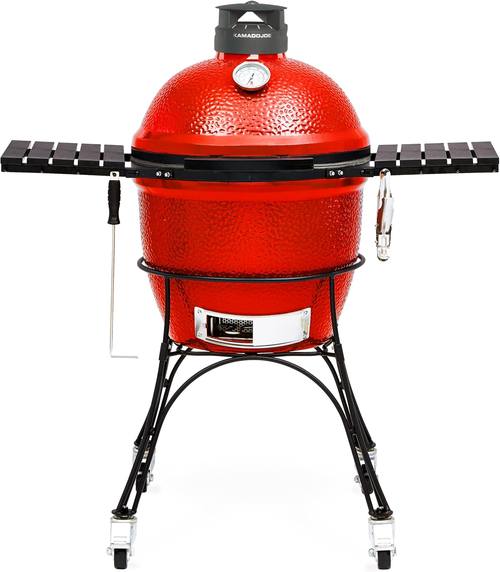
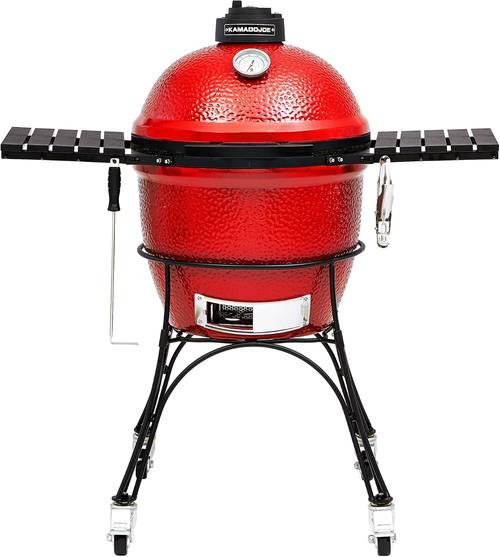
Kamado Joe Classic Joe Series II 18-inch Ceramic Charcoal Grill and Smoker with Cart, Side Shelves, Stainless Steel Grates and 250 Cooking Square Inches in Red, Model KJ-23RHC
Air hinge, Divide & Conquer system, holds temp through anything
Visit on Amazon →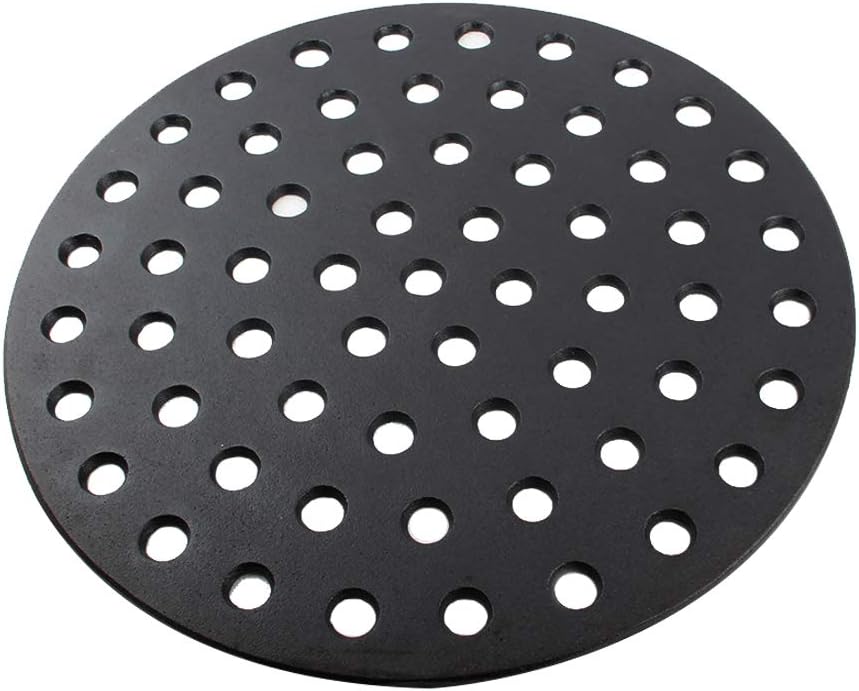
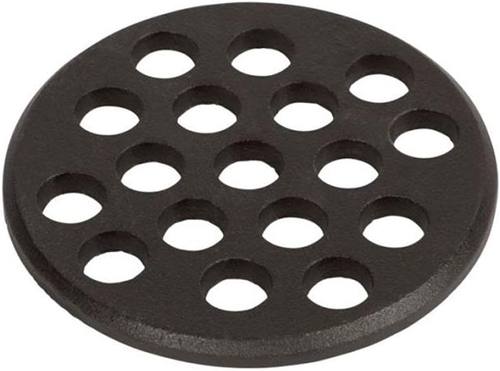
Dracarys Round cast Iron fire Grate,BBQ high Heat Charcoal Plate for XLarge Big Green Egg fire Grate Bottom Grate Grill Parts Charcoal Grate Replacement Parts XLarge Big Green Egg Accessories-17inch
Cast iron grate, fits XLarge Big Green Egg, high heat
Visit on Amazon →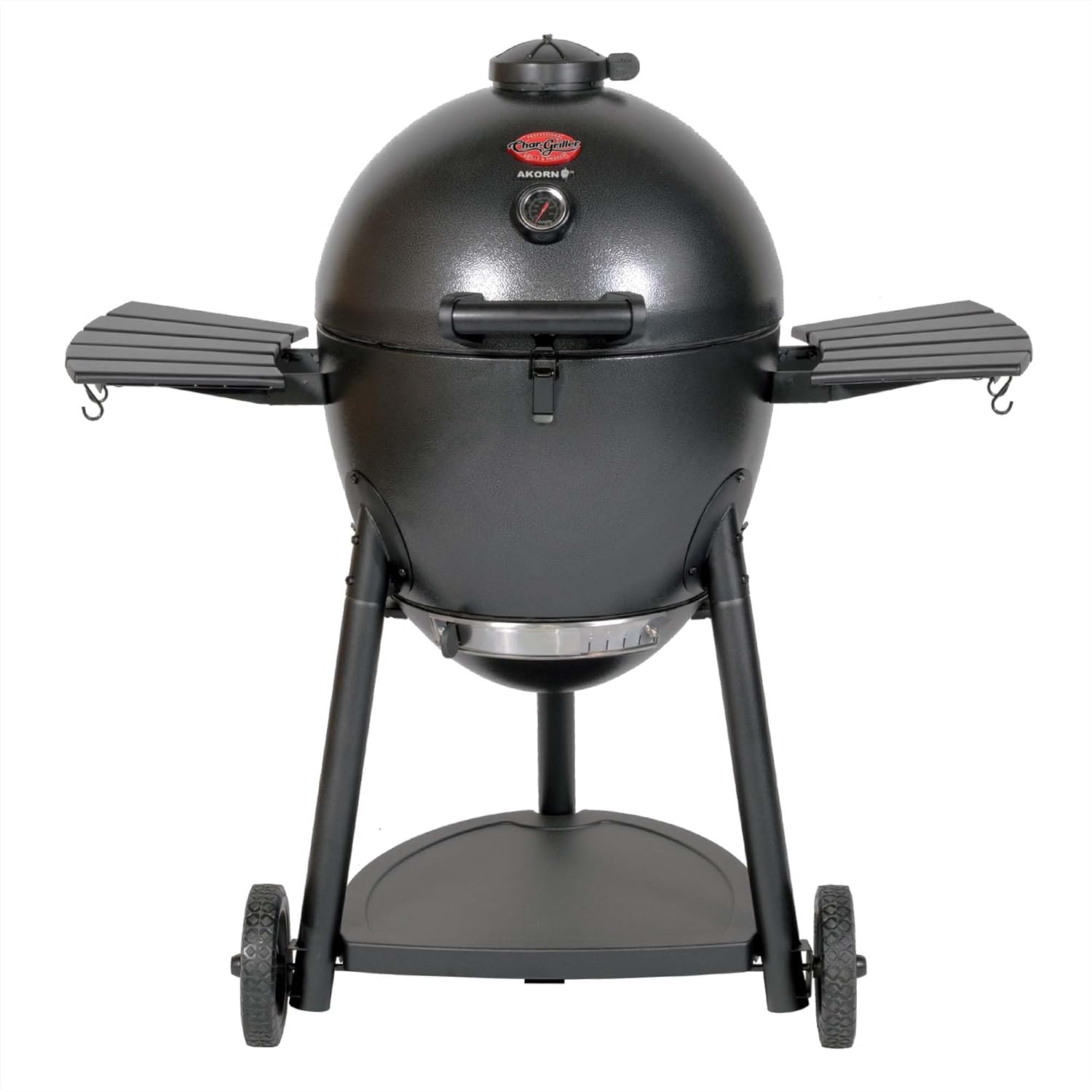
Char-Griller® AKORN® Kamado Charcoal Grill and Smoker with Cast Iron Grates, Warming Rack and Locking Lid with 445 Cooking Square Inches in Graphite, Model E16620
Looking for great searing, smoking, & superior low & slow cooking? Look no further than the Char-Griller AKORN Kamado charcoal grill, slate. With features like an easy dump ash pan & Dual adjustable d
Visit on Amazon →Why you should trust me
I'm Big Hank. I've been cooking competition barbecue for eighteen years, and for the last six I've gone all-in on kamados. I own a Kamado Joe Classic II that I bought on a Black Friday deal for ~$749, and a beat-up Akorn that's my backup.
I've replaced my own gasket with nomex, I've rebuilt a firebox, and I've got a 90-pound lab mix named Sooty who sleeps next to the Big Joe during overnight cooks.
I've made every mistake you can make with a kamado, including turning a ~$849 brisket into a charcoal briquette because I overshot temp and couldn't choke it back down.
I buy my own grills, I break them, and I tell you what happened.
How I picked and tested
My criteria are simple. First, it has to hold 250 degrees for twelve hours through weather. I don't care if it's raining sideways or it's twenty below; if I have to babysit the vents, it's a charcoal pit with a fancy lid.
Second, the ceramic has to be thick enough to matter. A thin liner is just a metal grill wearing a costume.
Third, the warranty has to cover the firebox without a fight. Ceramic cracks. If the manufacturer doesn't stand behind it, you're buying a repair bill.
And fourth, I have to trust it with a ~$849.00 brisket. That's the test.
I cooked on each of these grills for months, not weeks. I ran overnight cooks in Minnesota winters, I seared steaks screaming hot in July, and I checked buyer reviews for complaint patterns that matched what I saw in my own shop. I've also got a buddy named Ray who's been on a Big Green Egg for fifteen years, and he's taught me more about heat management than any book ever did.
Our pick: Kamado Joe Classic II
 Visit on Amazon →
The Kamado Joe Classic II is the grill I cook on every week, and it's the one I'd recommend to anyone who wants to do this seriously. The air hinge is a revelation. I remember the first time I opened the dome with one hand while holding a plate of ribs in the other, and I nearly dropped both because I wasn't used to not fighting a heavy ceramic lid.
Visit on Amazon →
The Kamado Joe Classic II is the grill I cook on every week, and it's the one I'd recommend to anyone who wants to do this seriously. The air hinge is a revelation. I remember the first time I opened the dome with one hand while holding a plate of ribs in the other, and I nearly dropped both because I wasn't used to not fighting a heavy ceramic lid.
The Divide & Conquer system that comes in the box is actually useful, not a gimmick. I've used the half-rack for a brisket and the other side for a pan of beans, and it just works.
One Saturday I had a pork shoulder on the left and a cast iron skillet of cornbread on the right, and both came off at the same time, perfect.
The heat retention is what separates it from the cheaper stuff. I lit it one January morning when it was five degrees outside, let it heat soak for forty-five minutes, and it held 250 for nine hours straight without me touching the top vent.
I checked it before I went to bed at midnight and again at 6 a.m., and the dome thermometer hadn't moved.
That's the whole point of a kamado. Street price is ~$799, and you can find it on sale for less. I paid ~$749 on Black Friday and I'd do it again tomorrow.
But it's not perfect. The felt gasket peeled off after about a year of heavy use, which is a known pattern. One buyer wrote in March, "The gasket keeps falling off," and I've seen the same thing. I replaced it with a nomex gasket from a dealer for twenty bucks and it's been fine since.
The cart also wobbles on uneven ground, which is annoying if you're wheeling it across a lawn. It's got cheap plastic wheels that sink into soft dirt.
If you're cooking on a patio, you won't care. If you're planning to move it around, plan to either level the ground or upgrade the wheels.
These are flaws, but they're not dealbreakers. The gasket is a wear item, like tires on a truck. The wobble is a nuisance, not a failure. This is the grill I'd buy for anyone who wants to cook real barbecue without fighting the equipment.
If you're the type of person who wants to set a brisket on at midnight and wake up to a steady 225 without touching anything, this is the grill for you.
Runner-up: Big Green Egg Large
The Big Green Egg is the granddaddy, and it's earned its reputation. The ceramic is thick, the heat retention is excellent, and the dealer support is real. Ray has had the same Large for fifteen years and he's only replaced the gasket twice. That's a testament to durability. The Egg holds temp like a bank vault. I've cooked on Ray's rig more times than I can count, and it's never let him down.
 Visit on Amazon →
But the price is a kick in the teeth. You're paying ~$899 to ~$1,199 for the Large, and it doesn't even come with a nest or a converter. You have to drop another ~$150 on a stand and a plate setter before you can even do a low and slow cook.
Visit on Amazon →
But the price is a kick in the teeth. You're paying ~$899 to ~$1,199 for the Large, and it doesn't even come with a nest or a converter. You have to drop another ~$150 on a stand and a plate setter before you can even do a low and slow cook.
The cast iron grate is ~$150, and the deflector is another ~$80. It adds up fast. I priced out a fully functional Egg setup once and it came to damn near ~$1,400, which is more than a Big Joe with everything included.
And the gasket is still a felt strip that needs replacing every couple of years. It's the same wear item as the Kamado Joe, but on a more expensive grill. The hinge is also not as smooth. You have to hold the dome with one hand while you work with the other, and that gets old fast when you're flipping steaks for eight people.
I respect the Egg. It's a lifetime purchase if you take care of it. But I think you're paying for the name as much as the performance. If you've got a dealer nearby who'll back you up, it's a solid choice. If you're comparing specs and features head to head, the Kamado Joe gives you more for less money.
This is the grill for someone who values brand longevity and dealer support over out-of-the-box value, and who doesn't mind spending extra on accessories over time.
Budget pick: Akorn
The poor man's egg. For ~$249, you get a steel-bodied kamado that weighs half as much as a ceramic one. It's portable, it's cheap, and it'll hold temp reasonably well if you're careful. I've got one as a backup, and I've used it for tailgating and camping. I've loaded it into the back of my truck and driven two hours to a cookout, and it fired right up.
But it's not a ceramic kamado. It won't hold heat like the real thing. I've seen the temp swing twenty degrees on a windy day, and that's the difference between a good bark and a mediocre one. The firebox is a cheap liner that I've seen crack within a year.
I replaced mine twice before I gave up and bought the Big Joe. The gasket is also a cheap fiberglass strip that degrades fast, and the legs are flimsy.
It does the job, but it doesn't do it with any grace.
For ~$249, though, it's a fantastic way to learn. If you're just starting out and you don't want to drop a grand, it's a fine first kamado. You'll learn heat soak, you'll learn how to choke it down, and you'll learn why ceramic matters. Just don't expect it to last a decade. At 18 cents a day over three years, it's cheap enough to replace without crying.
If you're the type of person who wants to learn the kamado game without risking a big investment, the Akorn will teach you everything you need to know.
The competition
The Vision Grills Pro S-series is the budget ceramic option, and it's a mixed bag. At ~$399 to ~$599, it's tempting, and the cast iron grate is a nice touch. But the firebox is cheaper than the Kamado Joe or the Egg, and the paint peels after a few seasons.
I've seen reports of it eating through a bag of lump in three hours on a low and slow cook. That's not a kamado; that's a charcoal pit with a ceramic liner.
I'd rather spend the extra ~$200 on the Kamado Joe and get a grill that actually holds heat.
The Pit Boss Kamado is a metal knockoff with a ceramic liner. It's cheaper, sure, but it's not a real kamado. It won't hold heat like ceramic, and the temperature swings are wild. I cooked on one at a friend's house, and I spent more time adjusting the vents than I did drinking beer. Skip it.
The Primo Oval XL is a genius design. The oval shape gives you more grilling space than a round kamado, and the two-zone cooking is legit. But at ~$1,199 to ~$1,599, it's right in line with the Big Joe, and accessories are harder to find.
Plus the grill is heavy as hell. Moving it is a two-man job, and if you've got a bad back, you're going to hurt yourself.
I've thought about buying one, but I'd need to hire a crew to get it into my backyard.
The bottom line
Buy the Kamado Joe Classic II if you want the best combination of features, performance, and price under a grand. Buy the Big Green Egg if you want a proven brand with dealer support and you don't mind paying for it.
Buy the Akorn if you're on a tight budget and you want to learn. And skip the metal knockoffs entirely.
A kamado is a ceramic instrument, not a gadget. If it can't hold 225 degrees for eight hours without you touching the vents, it's a charcoal pit with a fancy lid.