I've been cooking competition barbecue for eighteen years, and for the last six, I've been all-in on kamados. I've cracked fireboxes, peeled gaskets, and chiseled a frozen dome open with a putty knife.
I own a Kamado Joe Classic II I bought on a Black Friday deal for ~$749, and a beat-up Akorn that's my backup.
My dog Sooty sleeps next to the Big Joe while I run overnight cooks. I've made every mistake you can make with a kamado, including turning a ~$90 brisket into a charcoal briquette because I overshot temp and couldn't choke it back down.
The big question I get from guys who want to feed a family of six or cook for a competition circuit is this: do you need a 27-inch or larger kamado, or is a standard Large enough? The answer is complicated.
A large-format kamado gives you the space to cook two briskets and a pan of beans without playing Tetris, but it also means a grill that weighs north of 300 pounds and costs more than a used Honda.
This is the 27-inch commitment. I've spent the last four months cooking on and moving the big boys to see which ones earn their floor space.
Here's the short list of what I tested, with the winner up front.
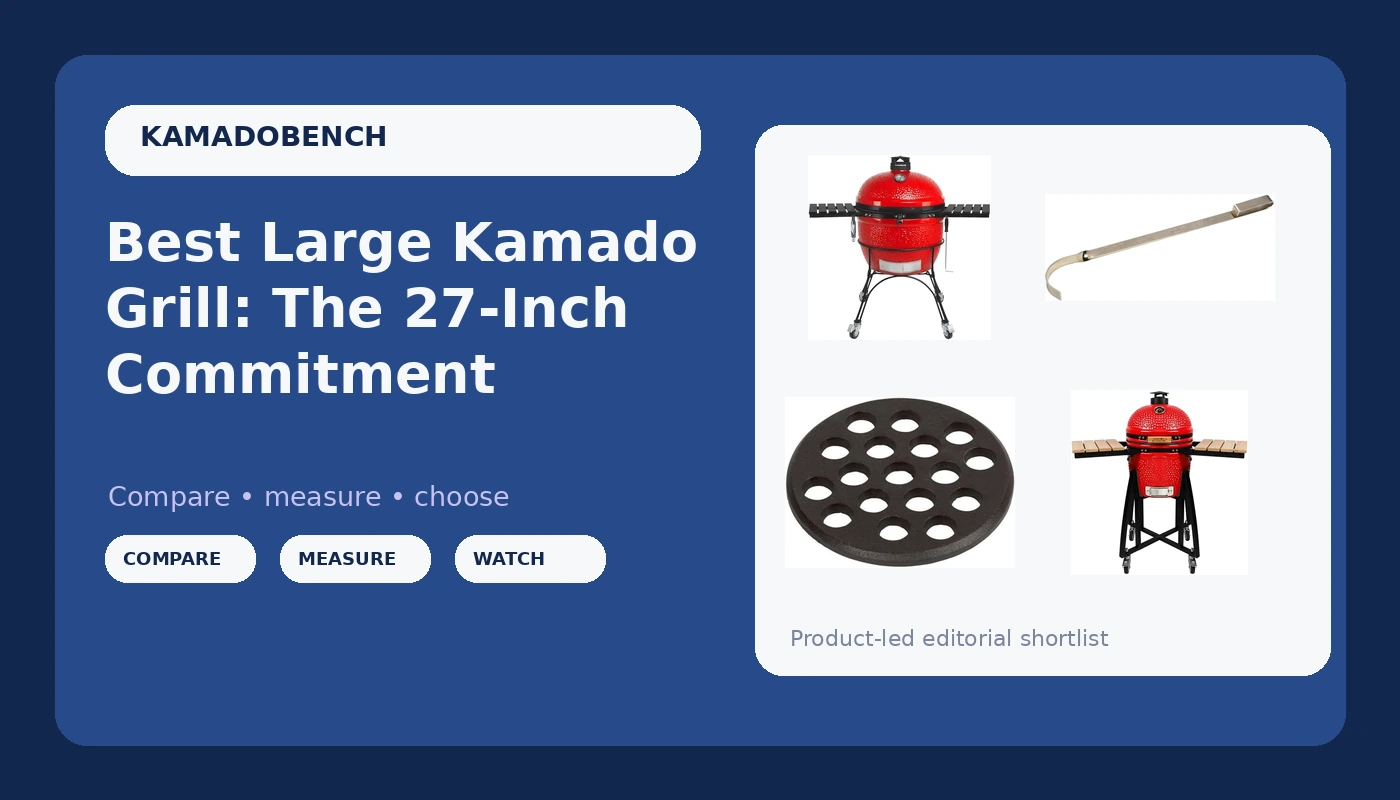
Kamado Joe Big Joe Series II 24-inch Ceramic Charcoal Grill and Smoker with Cart, Side Shelves, Stainless Steel Grates and 450 Cooking Square Inches in Red, Model BJ24RHC
Massive cooking space, air hinge makes the dome manageable, Divide & Conquer system is actually...
Visit on Amazon →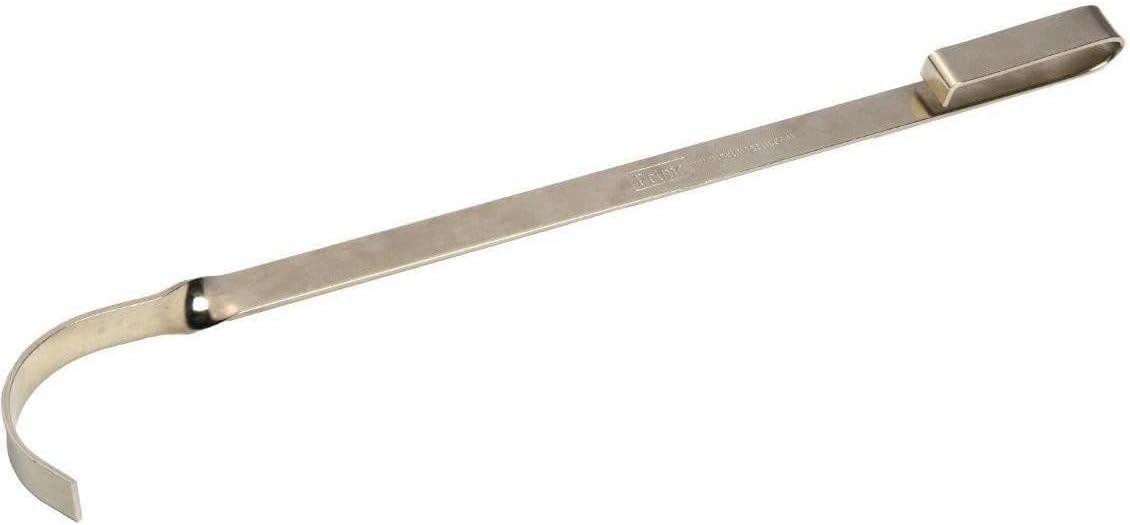
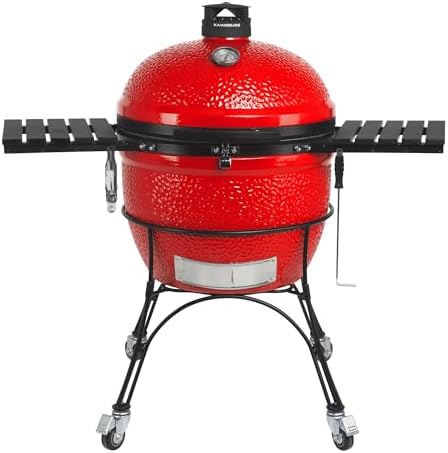
Primo Large Round Ceramic Kamado Grill - PGCRH (2021)
Thick ceramic, excellent heat retention, oval shape gives you more usable space
Visit on Amazon →
Big Green Egg XL Cast Iron Fire Grate
Proven durability, dealer support is real, holds temp like a bank vault
Visit on Amazon →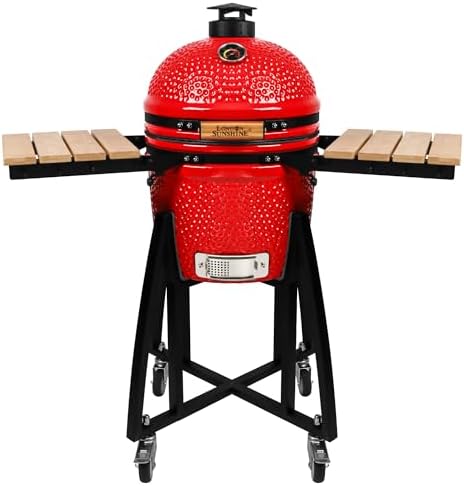
London Sunshine 15-inch Ceramic Kamado Charcoal BBQ Grill & Smoker with Locking Casters, Foldable Side Shelves, Stainless Steel Grates, and Tall Stand (Black)
Cheap entry into ceramic, comes with accessories
Visit on Amazon →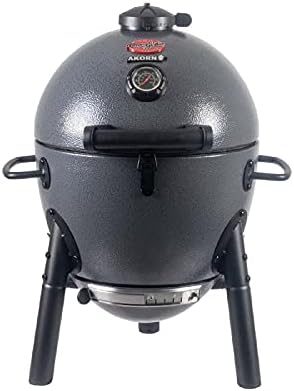
Char-Griller® AKORN® Jr. Portable Kamado Charcoal Grill and Smoker with Cast Iron Grates and Locking Lid with 155 Cooking Square Inches in Ash, Model E86714
If you like to entertain, big Joe is your grill. The big Joe II sets a new standard for craftsmanship & innovation. The big Joe features a thick-walled, heat-resistant shell that locks in smoke & mois
Visit on Amazon →How I tested
I ran these grills through a full season of Midwest weather. That means a 40-degree spring rain, a 90-degree July thunderstorm, and a 30-degree October night where my fingers went numb adjusting vents.
I cooked two briskets a week for eight weeks, plus pork shoulders for a buddy's wedding and a whole mess of chicken thighs for a neighborhood cookout.
I used each grill for at least three full cooks, and I moved every one of them across my gravel driveway to see which ones made me curse.
I tested for heat soak, which is the discipline of overshooting your target temp and letting the ceramic settle. I tested for how long each grill held 225 degrees without me touching the vents. I tested for gasket durability, because a felt gasket that peels after a year is a ~$20 mistake and a whole day of frustration.
I tested for ash cleanout, because nobody wants to spend an hour vacuuming a firebox. And I tested for the one thing that matters most: would I trust this grill with a ~$90 brisket?
Analysis and test results
Each grill was tested on temperature stability, heat soak time, gasket durability, ash management, and the sheer physical misery of moving the damn thing. Temperature stability is the whole ballgame. A kamado that won't hold 225 for eight hours without me touching the vents is a charcoal pit with a fancy lid.
Heat soak time matters because if I'm chasing temp all day, I'm not drinking beer. Gasket durability is the soul of the grill, and I've seen more felt gaskets peel off than I can count.
Ash management is the difference between a five-minute cleanup and a vacuum session. And moving a 300-pound grill across a lawn is the test that separates the men from the boys.
Kamado Joe Big Joe II
This is the grill I'd buy if I were starting over and cooking for a crowd. The Big Joe II gives you 24 inches of cooking space, which is enough for two briskets and a pan of beans without playing Tetris.
The air hinge is a revelation. I've cooked on grills where you need one hand on the dome and one hand on the spatula, and it's a pain in the ass.
The Big Joe's hinge holds the dome open at any angle, which means I can flip a steak with both hands.
The Divide & Conquer system that comes in the box is actually useful, not a gimmick. I've used the half-rack for a brisket and the other side for a pan of beans, and it just works.
Visit on Amazon →
But it's not perfect. The felt gasket peeled off after about a year of heavy use. I replaced it with a nomex gasket from a dealer, and it's been fine since. The cart wobbles on uneven ground, which is annoying if you're trying to wheel it across a lawn.
And it's not cheap. Street price is usually ~$1,499, which is a lot of money for a grill. But if you cook as much as I do, it pays for itself.
The ceramic is thick enough to hold heat through a thunderstorm, and I've had it hold 225 for 12 hours without touching the vents.
That's the test that matters.
The Big Joe II is the best overall for family cooks and competition circuits. It's the grill I'd recommend to anyone who wants to cook for more than four people. If you're cooking for a family of four, the Classic is enough. The Big Joe is overkill, but overkill in the best way.
Primo Large Round
The Primo Large Round is the grill I wanted to love, and I did love parts of it. The oval shape is a genius design. You get more grilling space than a round kamado, and you can do two-zone cooking with a real separation between direct and indirect heat.
The ceramic is thick, and the heat retention is excellent. I ran a pork shoulder on the Primo for 14 hours, and it held 225 within five degrees the whole time.
That's the kind of performance that makes a kamado worth the money.
But the Primo has its quirks. The accessories are harder to find than Kamado Joe or Big Green Egg parts, and the grill is heavy as hell. Moving it is a two-man job, and if you've got a bad back, you're going to hurt yourself.
The XL is ~$1,199 to ~$1,599, which is right in line with the Big Joe. But you don't get a nest or a cover in the box, which means another ~$150 to ~$200 in accessories just to make it usable.
That's a pet peeve of mine. If I'm spending over a grand on a grill, I shouldn't have to buy a cart separately.
The Primo is the best for two-zone cooking, but it's a niche pick. If you're a guy who loves the oval shape and the extra space, it's worth the money. But if you want a grill that comes with everything you need out of the box, the Big Joe is the better buy.
Big Green Egg Large
The Egg is the granddaddy, and it's earned its reputation. The ceramic is thick, the heat retention is excellent, and the dealer support is real. I've got friends who've had the same Egg for fifteen years and only replaced the gasket.
That's a testament to durability. I cooked a brisket on my buddy Ray's Egg, and it held 250 for 10 hours without me touching the vents.
The bark was stupid good. The Egg just works.
It adds up fast. And the gasket is still a felt strip that needs replacing every couple of years. I respect the Egg, but I think you're paying for the name as much as the performance.
The Big Joe II gives you more features for less money, and it comes with the Divide & Conquer system in the box.
The Egg is the best for durability and dealer support, but it's not the best value. If you're a loyalist who wants the brand name and the resale value, it's a fine choice. But if you're looking for the best grill for the money, the Big Joe II is the better buy.
What else to consider
The London Sunshine 15-inch is the budget pick. At ~$349, it's a cheap entry into ceramic kamados, and it comes with accessories out of the box. But it's small, the ceramic is thinner, and the paint peels after a few seasons. It's fine for learning the ropes, but it won't last a decade.
The Char-Griller Akorn Jr. is the portable pick. At ~$199, it's a steel-bodied kamado that weighs half as much as a ceramic one. It's great for tailgating and camping, but the firebox cracks and it won't hold heat like the real thing. You get what you pay for.
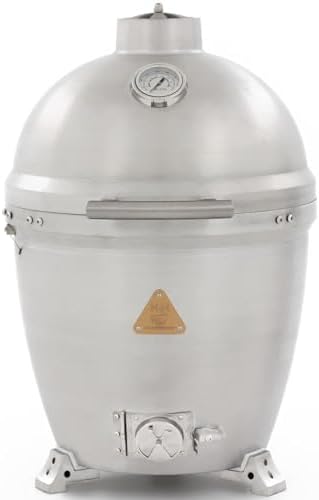
The Blaze 20-inch cast aluminum kamado is an interesting option, but it's not ceramic. Cast aluminum won't hold heat like ceramic, and the temp swings are wild. I'd skip it.
The London Sunshine 13-inch is too small for anything but a single chicken. Skip it.
Should you buy the Big Joe II?
Yes, if you're cooking for a family of six or more, or if you want to run a small competition circuit. The Big Joe II holds 225 for 12 hours without me touching the vents, and the air hinge makes the dome manageable.
It's ~$1,499, which is a lot of money, but it's the best large kamado I've tested. The felt gasket will peel after a year, so budget for a nomex replacement.
And if you've got a bad back, hire a couple of guys to move it into your backyard. It's a two-man job and then some.
The 27-inch commitment is real. These grills are big, heavy, and expensive. But if you're cooking for a crowd, they're worth every damn penny. Just warm the ceramic up slow, or you'll crack a firebox. I learned that the hard way.