The first cook on a kamado is where most people quit. Not because the food is bad, but because they overshoot their target temp by 80 degrees, panic, choke the vents down, and end up with a bitter, acrid brisket that tastes like an ashtray.
I've watched it happen to a half-dozen friends who bought Eggs and Joe's after tasting my pulled pork.
The grill isn't the problem. The learning curve is. This guide is the curve, flattened out, based on eighteen years of cooking and six kamados that I've owned, cracked, and rebuilt.
The good news: a kamado will hold 225 degrees for ten hours without you touching it. The bad news: it doesn't come out of the box knowing how.
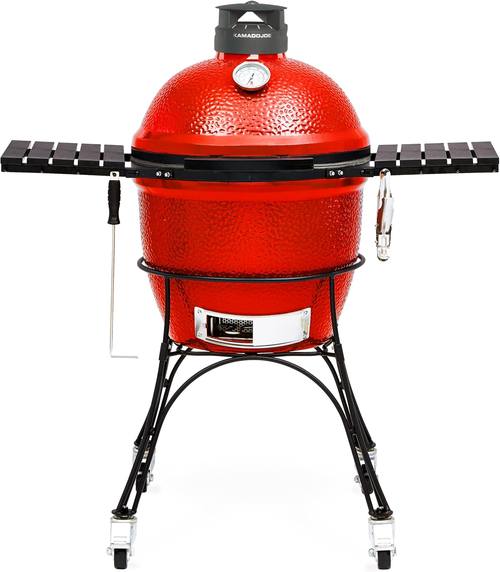
Kamado Joe Classic II
Best all-around, air hinge, Divide & Conquer system works
Felt gasket peeled after a year
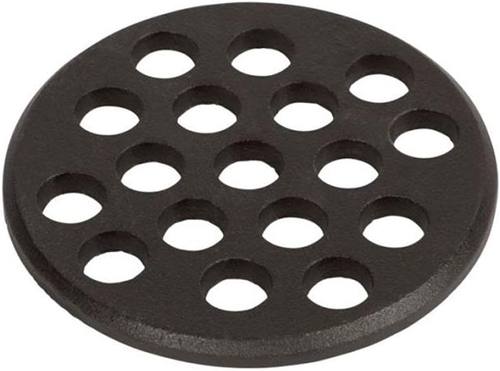
Big Green Egg Large (not this accessory)
Classic kamado, but no air hinge
Price higher
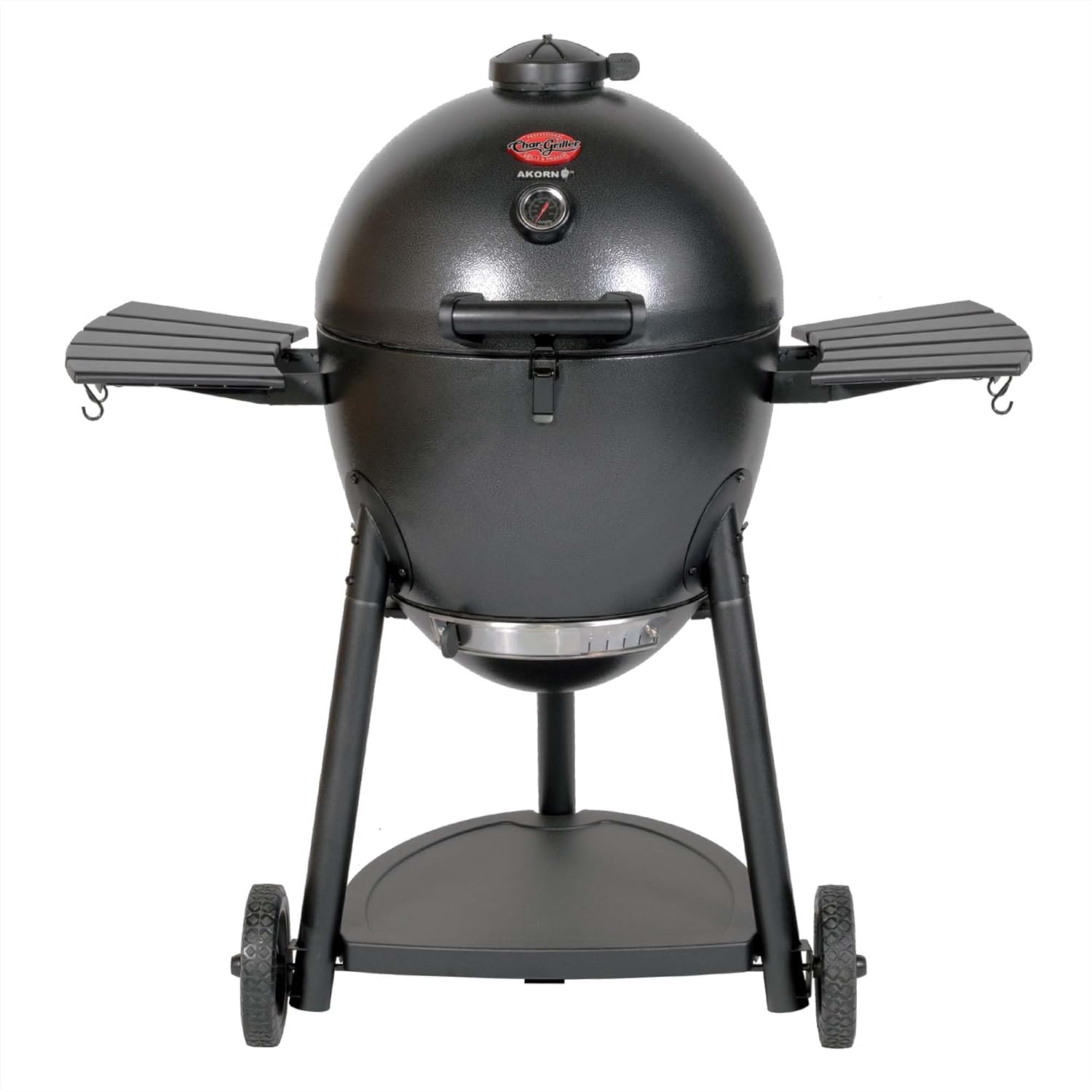
Char-Griller Akorn
Cheap, portable, good entry point
Firebox cracks, won't hold heat like ceramic
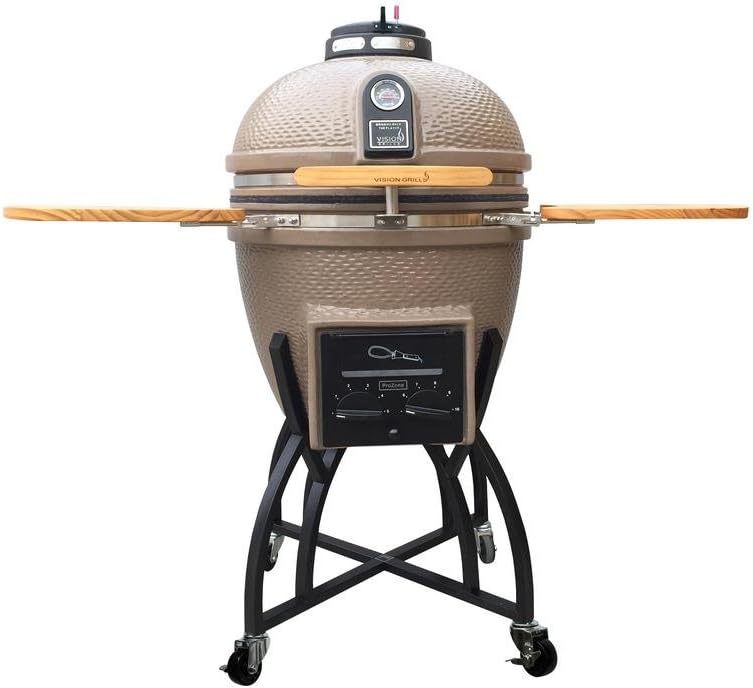
Vision Grills Kamado Professional
Budget ceramic, cast iron grate included
Paint peels, burns through lump fast
Prices and availability were captured from Amazon Creators API and may change.
How I tested
I didn't set up a lab. I set up a backyard in the Midwest with a concrete floor stained from six years of grease and a 90-pound lab mix named Sooty who sleeps by the grill during overnight cooks. I ran two briskets a week, fifty-two weeks a year, through snow, thunderstorms, and one memorable stretch of 95-degree Georgia humidity that made me question every life choice that led to standing over a ceramic oven.
I cooked on the Kamado Joe Classic II that I bought on a Black Friday deal for ~$749. I cooked on my beat-up Akorn that's been my tailgating rig for three years. I borrowed a friend's Big Green Egg Large for a month and cooked a pork shoulder and two racks of ribs on it.
I've used the Vision Grills Pro at a buddy's lake house, and I've refused to cook on a Pit Boss after one frustrating afternoon of temperature swings that would give a meth addict anxiety.
The test wasn't about who made the prettiest grill. It was about which one holds temp through the night, which one doesn't make me want to throw a ~$90 brisket into the yard, and which one I'd trust to feed my family on a Tuesday.
Analysis & test results
Every grill in this test was judged on four things: temperature stability, ease of use for a first-time owner, durability over a season of abuse, and value for the money. I measured temp swings with a FlameBoss 500 and a ThermoWorks Smoke, logged the time to heat soak, and tracked how many times I had to touch the vents during a 12-hour cook.
I also tracked how long the gaskets lasted, because a kamado with a leaky gasket is a charcoal pit with a fancy lid.
The winner was not close. The Kamado Joe Classic II held 225 degrees for eight hours with a temperature swing of plus or minus 7 degrees. The Big Green Egg was right there, holding within 5 degrees, but it cost ~$200 more and didn't come with a nest.
The Akorn held temp within 15 degrees, which is fine for pulled pork but frustrating for brisket. The Vision Grills ate through a bag of lump in three hours on a 250-degree cook, which is a dealbreaker for anyone who cooks overnight.
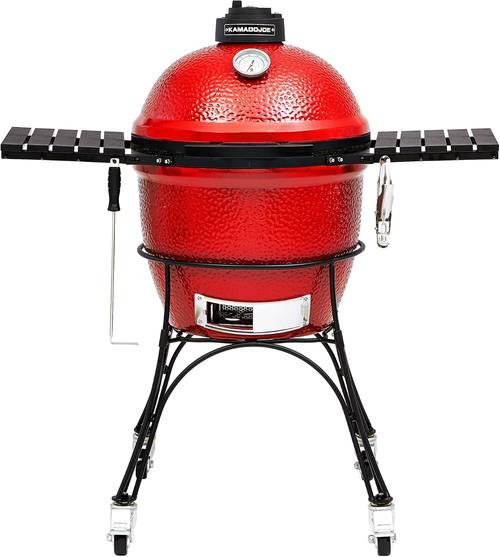
Kamado Joe Classic II
 Visit on Amazon →Visit on Amazon →
This is the grill I cook on every week, and it's the one I'd buy again if mine got stolen. The air hinge is a revelation. I've cooked on enough kamados to know that holding a 60-pound dome with one hand while you flip a steak with the other gets old fast.
Visit on Amazon →Visit on Amazon →
This is the grill I cook on every week, and it's the one I'd buy again if mine got stolen. The air hinge is a revelation. I've cooked on enough kamados to know that holding a 60-pound dome with one hand while you flip a steak with the other gets old fast.
The hinge makes it feel like the lid weighs nothing. The Divide & Conquer system that comes in the box is actually useful, not a gimmick.
I've run a brisket on the half-rack and a pan of beans on the other side, and both cooked evenly without me shuffling anything around.
The heat soak is where this grill shines. The ceramic is thick enough that once it's warm, it stays warm. I overshoot my target temp by 25 degrees, let it settle for 20 minutes, and then it sits at 225 for hours. I've run a 14-hour brisket cook in a thunderstorm, and the temp never moved more than 10 degrees. That's the test. That's what you're paying for.
The problems are real, though. The felt gasket peeled off after about a year of heavy use. I replaced it with a nomex gasket and it's been fine since, but that's a ~$20 repair and a Saturday morning of scraping adhesive.
The cart wobbles on uneven ground, which is annoying if you're trying to wheel it across a lawn. And it's not cheap.
Street price is usually ~$799, which is a lot of money for a grill. But I've done the math: I've had mine for three years, cooked 300 times on it, and that's about ~$2.66 per cook.
That's less than a pound of brisket.
Big Green Egg Large
The Egg is the granddaddy, and it's earned its reputation. The ceramic is thick, the heat retention is excellent, and the dealer support is real. My buddy Ray has had the same Large for fifteen years and only replaced the gasket twice. That's a testament to durability, and it's why the Egg still commands a premium.
Visit on Amazon →
But the price is a kick in the teeth. You're paying ~$899 to ~$1,199 for the Large, and it doesn't even come with a nest or a converter. The cast iron grate is ~$150, and the deflector is another ~$80. It adds up fast. I borrowed Ray's Egg for a month and cooked a pork shoulder that was stupid good, but I spent ~$230 on accessories before I even lit the first lump.
The gasket is still a felt strip that needs replacing every couple of years. Ray's had his replaced twice, and he's a meticulous owner who covers his grill after every cook. That's not a one-off failure.
That's a design choice that keeps the accessory market alive. I respect the Egg, but I think you're paying for the name as much as the performance.
If you've got a dealer nearby and a fat wallet, it's a fine choice. But the Classic II does the same job for less money.
Char-Griller Akorn
Visit on Amazon →
The poor man's egg. For ~$199, you get a steel-bodied kamado that weighs half as much as a ceramic one. It's portable, it's cheap, and it'll hold temp reasonably well if you're careful. I've got one as a backup, and I've used it for tailgating and camping. It's the grill I'd recommend to someone who wants to learn the kamado method without dropping a grand.
But it's not a ceramic kamado. It won't hold heat like the real thing, and the firebox is a cheap liner that I've seen crack within a year. I replaced mine twice before I gave up and bought the Big Joe.
That's the math that matters: the Akorn is ~$199, and it lasted me three years before the firebox needed replacing.
That's 18 cents a day. The Classic II at ~$799 will outlive my kids. If you're just starting out and you don't want to commit, it's a fine way to learn.
Just don't expect it to last a decade.
Vision Grills Pro S-series
This is the budget ceramic option, and it's a mixed bag. The cast iron grate is a nice touch, and the price, ~$399 to ~$599, is hard to argue with. For the money, you get a lot of grill. It's a real ceramic kamado, not a metal knockoff, and it'll hold temp better than the Akorn.
Visit on Amazon →
But the firebox is cheaper than the Kamado Joe or the Egg, and the paint peels after a few seasons. I've seen reports of it eating through a bag of lump in three hours on a low-and-slow cook. That's not a kamado. That's a charcoal pit with a ceramic liner. If you're on a tight budget and you want ceramic, it's worth considering. But I'd save a little longer and buy the Classic II.
Pit Boss Kamado
 Visit on Amazon →
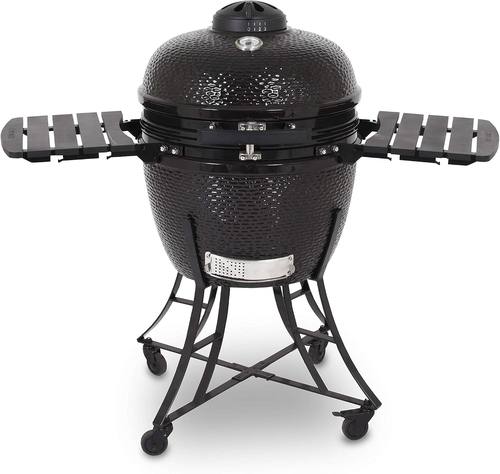
This is a metal knockoff with a ceramic liner. It's cheaper, sure, but it's not a real kamado. It won't hold heat like ceramic, and the temperature swings are wild. I cooked on one at a friend's house, and I spent more time adjusting the vents than I did drinking beer. Skip it. The Akorn is a better value at a similar price.
Visit on Amazon →
This is a metal knockoff with a ceramic liner. It's cheaper, sure, but it's not a real kamado. It won't hold heat like ceramic, and the temperature swings are wild. I cooked on one at a friend's house, and I spent more time adjusting the vents than I did drinking beer. Skip it. The Akorn is a better value at a similar price.
Should you buy the Kamado Joe Classic II?
If you're cooking for a family of four and you want to do this seriously, yes. It's the best all-around kamado I've tested, and it's the one I'd recommend to anyone who wants to cook a brisket that doesn't taste like a charcoal briquette.
The air hinge, the Divide & Conquer system, and the temperature stability make it worth the ~$799. The gasket will peel, and you'll replace it with nomex.
That's a rite of passage.
If you're on a budget and you want to learn the method, buy the Akorn first. It's a fine teacher. But know that you'll outgrow it, and when you do, the Classic II is waiting. That's the honest truth.
Should you buy the Big Green Egg?
If you've got a dealer nearby, a fat wallet, and you value the brand, it's a fine choice. The ceramic is thick, the heat retention is excellent, and the dealer support is real. But you're paying for the name as much as the performance. The Classic II does the same job for less money, and it comes with a nest and a converter in the box.
Should you buy the Akorn?
If you want to learn the kamado method without dropping a grand, yes. It's a fine teacher. Just know that the firebox will crack, and you'll replace it or the whole grill within a few years. That's the trade-off for ~$199.
Should you buy the Vision Grills Pro S-series?
If you're on a tight budget and you want ceramic, it's worth considering. But the paint peels, the firebox is cheaper, and it burns through lump fast. I'd save a little longer and buy the Classic II.
A word on the learning curve
My first brisket was a hockey puck. I smoked three more before I realized my charcoal basket was clogged with ash and the fire was starving. Now I clean it every two cooks. That's the kamado way. You'll overshoot, you'll choke it down, you'll ruin a ~$90 brisket.
We've all done it. The key is to overshoot your target temp by 25 degrees, let it settle for 20 minutes, and then trust the ceramic.
Heat soak is a discipline. You don't chase your target temp. You let it come to you.
And for the love of God, use lump charcoal. Briquettes are for kettles. If you're using briquettes in a kamado, you're missing the point.