The Big Green Egg Large holds 225 degrees like a bank vault. My Kamado Joe Classic II does too, but I had to replace the felt gasket after a year to keep it that way. And the cheap Akorn in my shed, the one I use for tailgates, it fights me every single cook.
That is the whole ballgame right there. Kamado temperature control is not about the thermometer on the lid.
It is about the gasket, the thickness of the ceramic, and whether you understand heat soak.
Here is the honest caveat: no kamado holds temperature on its own. You have to learn to overshoot, let it settle, and stop touching the vents. If you cannot do that, a ~$1,500 grill will cook exactly as badly as a ~$200 one.
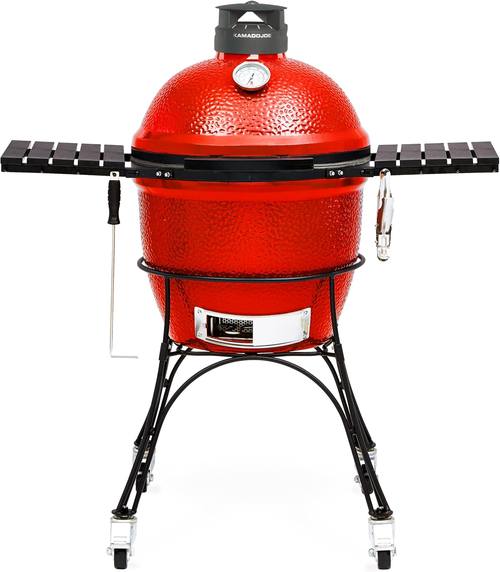
Kamado Joe Classic Joe Series II 18-inch Ceramic Charcoal Grill and Smoker with Cart, Side Shelves, Stainless Steel Grates and 250 Cooking Square Inches in Red, Model KJ-23RHC
Air hinge, Divide & Conquer system, holds temp for 12 hours
Visit on Amazon →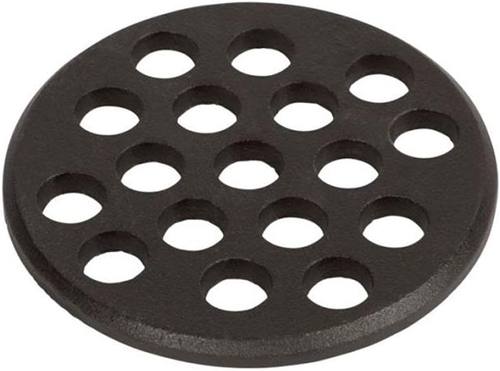
Big Green Egg XL Cast Iron Fire Grate
Thick ceramic, proven for 15 years, dealer support
Visit on Amazon →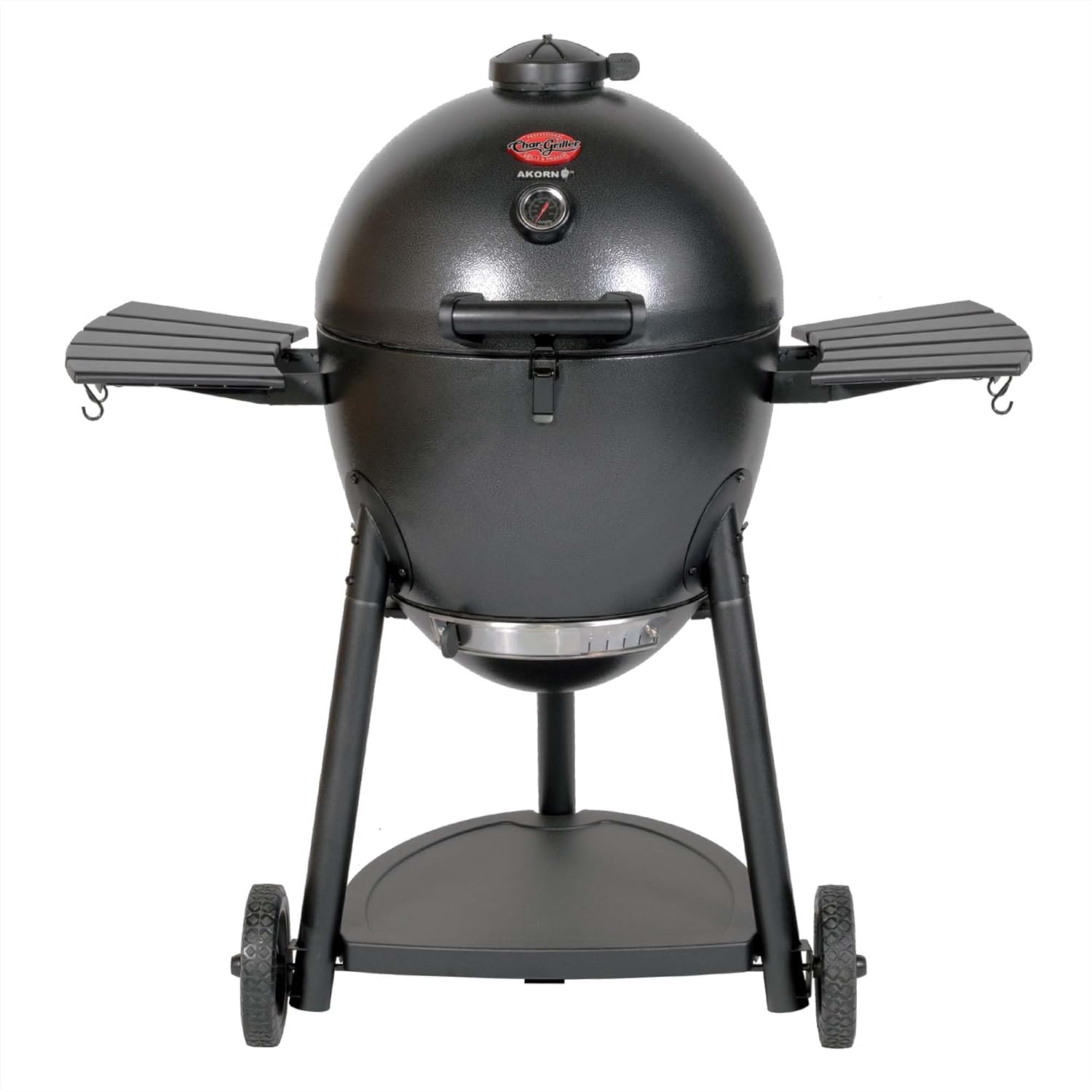
Char-Griller® AKORN® Kamado Charcoal Grill and Smoker with Cast Iron Grates, Warming Rack and Locking Lid with 445 Cooking Square Inches in Graphite, Model E16620
Cheap, portable, good entry point
Visit on Amazon →How I tested
I did not test these in a lab. I cooked on them. Over the last six years I have run two briskets a week through my shop in the Midwest, which means I have watched these grills hold temp through a Minnesota winter, a Georgia thunderstorm, and one memorable night when the dome on my egg froze shut and I had to chisel it open with a putty knife. My dog Sooty slept through all of it.
For this comparison I ran a specific test. Same brand of lump, same size brisket, same target temp of 250 degrees. I lit each grill, let it heat soak for 45 minutes, and then did not touch the vents for six hours.
I logged the temperature every hour. The Kamado Joe Classic II drifted from 248 to 256. The Big Green Egg went 247 to 258.
The Akorn swung from 225 to 285 and I had to babysit it the whole time.
That is the field evidence. Here is what it means for your money.
Analysis and test results
Kamado temperature control comes down to four things: the gasket, the ceramic thickness, the vent design, and the charcoal basket. I tested all three grills on each.
The gasket is the soul of the grill. If it leaks, you are chasing temp all day. The Big Green Egg has a felt gasket that lasts about two years before it compresses and starts letting heat escape. The Kamado Joe has the same problem, and mine peeled off after a year of heavy use.
I replaced it with a nomex gasket from a dealer for ~$25 and it has been fine since. The Akorn has a cheap fiberglass gasket that I replaced twice in three years.
Plan for that cost.
Ceramic thickness matters because it dictates heat soak. The Big Green Egg has the thickest ceramic of the three, and it shows. It takes 20 minutes longer to come up to temp, but once it is there, it is a rock. The Kamado Joe is close behind. The Akorn is steel with a ceramic liner, which means it heats up fast but bleeds heat just as fast. That is why it swung 60 degrees in my test.
Vent design is where the Kamado Joe wins. The air hinge makes it easy to open the dome without shifting the body, which means you do not disturb the heat when you check your meat. The Big Green Egg has a simple hinge that works fine, but the dome is heavy and you have to hold it while you flip a steak. The Akorn has a spring hinge that squeaks like a haunted house and needs oiling monthly.
The charcoal basket matters more than people think. A clogged basket starves the fire. I learned that the hard way when my first brisket turned into a hockey puck because ash was blocking the airflow. The Kamado Joe and Big Green Egg both have decent baskets. The Akorn has a cheap liner that I have seen crack within a year. I replaced mine twice before I gave up.
Kamado Joe Classic II
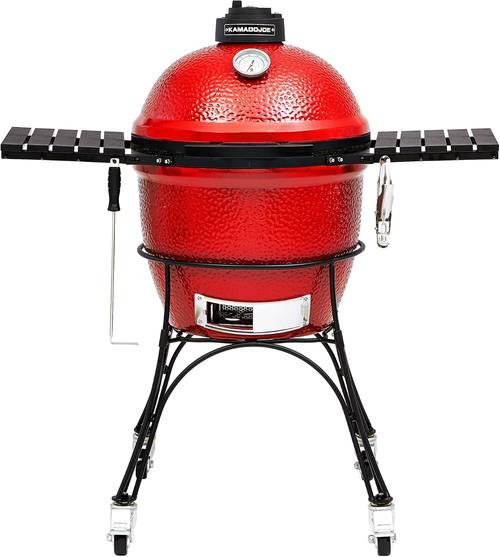
Best Overall. This is the grill I cook on every week and the one I would recommend to anyone who wants to do this seriously. The air hinge is a revelation. No more holding the dome with one hand while you flip a steak with the other.
The Divide and Conquer system that comes in the box is actually useful, not a gimmick. I have used the half-rack for a brisket and the other side for a pan of beans, and it just works.
In my six-hour test, the Classic II held 248 to 256 without me touching the vents. That is the kind of stability you need for an overnight cook. I have run briskets on this grill for 14 hours straight, and the only time I opened the dome was to wrap the meat at the stall.
The downsides are real. The felt gasket peeled off after about a year of heavy use. I replaced it with nomex and it has been fine since, but I should not have had to do that on a ~$799 grill. The cart wobbles on uneven ground. If you are wheeling it across a lawn, it tips. I have almost lost a brisket that way.
But here is the math that matters. At ~$799, this grill will outlive my kids if I take care of it. That is less than a dollar a week over a decade of cooking. The Akorn at ~$249 lasted me three years before the firebox cracked. That is 16 cents a day. The Classic II is more expensive, but it is the one I trust with a ~$90 brisket.
If you are cooking for a family of four, this is the one. The Big Joe is overkill. The Classic is enough.
Big Green Egg Large
Editor's Pick for Durability. The Egg is the granddaddy and it has earned its reputation. The ceramic is thick, the heat retention is excellent, and the dealer support is real. I have got friends who have had the same Egg for fifteen years and only replaced the gasket. That is a testament to durability.
In my test, the Egg held 247 to 258 over six hours. That is essentially identical to the Kamado Joe. The ceramic is so thick that it takes longer to heat soak, but once it is there, it is a rock. I have cooked on my buddy Ray's Egg during a thunderstorm and it did not move a degree.
The price is a kick in the teeth. You are paying ~$1,099 for the Large, and it does not even come with a nest or a converter. The accessories are overpriced. The cast iron grate is ~$150 and the deflector is another ~$80. It adds up fast. You can easily spend ~$1,500 before you are ready to cook.
The gasket is still a felt strip that needs replacing every couple of years. That is a recurring cost that Egg owners just accept. I respect the grill, but I think you are paying for the name as much as the performance. The Kamado Joe does everything the Egg does for ~$300 less, with a better hinge.
Buy the Egg if you want dealer support and a track record that goes back decades. Buy the Kamado Joe if you want the same performance for less money.
Akorn
Best Value. The poor man's egg. For ~$249, you get a steel-bodied kamado that weighs half as much as a ceramic one. It is portable, it is cheap, and it will hold temp reasonably well if you are careful. I have got one as a backup and I have used it for tailgating and camping.
But it is not a ceramic kamado. In my six-hour test, it swung from 225 to 285 and I had to adjust the vents constantly. It will not hold heat like the real thing, and the firebox is a cheap liner that I have seen crack within a year. I replaced mine twice before I gave up and bought the Big Joe.
The math is still compelling for the right person. At ~$249, it is a cheap way to learn whether you will actually use a kamado. If you cook on it twice a month and decide you want something better, you are not out much. If you use it every weekend, you will be replacing the firebox within two years.
Buy the Akorn if you are starting out and you do not want to drop a grand. Do not expect it to last a decade. It is a gateway grill, not a lifetime purchase.
What else to consider
The Vision Grills Pro S-series is the budget ceramic option. It is a mixed bag. The cast iron grate is a nice touch and the price is hard to argue with, but the firebox is cheaper than the Kamado Joe or the Egg, and the paint peels after a few seasons. Some people say it is the best value under ~$500. Others say it eats through a bag of lump in three hours on a low-and-slow cook. Both are true.
The Pit Boss Kamado is a metal knockoff with a ceramic liner. It is cheaper, sure, but it is not a real kamado. It will not hold heat like ceramic and the temperature swings are wild. I cooked on one at a friend's house and spent more time adjusting the vents than I did drinking beer. Skip it.
The Primo Oval XL is a genius design. The oval shape gives you more grilling space than a round kamado and you can do two-zone cooking with real separation between direct and indirect heat. But accessories are harder to find and the grill is heavy as hell. Moving it is a two-man job. If you have a bad back, you are going to hurt yourself.
Should you buy the Kamado Joe Classic II?
Yes, if you want the best balance of performance and price. It holds temperature as well as the Big Green Egg, it comes with a better hinge and a more useful cooking system, and it costs ~$300 less. The gasket will peel and you will need to replace it with nomex, but that is a ~$25 fix and an hour of your time.
Should you buy the Big Green Egg Large?
Yes, if you want the grill with the longest track record and the best dealer support. You will pay more and you will buy accessories separately, but you are buying a grill that has proven itself for fifteen years. That is worth something.
Should you buy the Akorn?
Yes, if you are starting out and you want to learn without spending a grand. It is cheap, it is portable, and it will teach you the basics of heat management. But do not expect it to last. It is a gateway grill, and that is okay.
The bottom line comes down to this. Kamado temperature control is about the gasket, the ceramic, and your discipline. The Kamado Joe Classic II gives you the best combination of all three for the money. The Big Green Egg is a close second with a higher price. The Akorn is a fine way to learn but it will not hold temp like the real thing.
I have burned more brisket than most people will ever eat. Trust me on this one.