After eighteen years of competition barbecue and six kamados that have cracked, peeled, and frozen shut on me, I've got a simple rule for anyone asking about kamado vs pellet grill: one of them is a musical instrument, and the other is a jukebox. Both make sound. Only one rewards the person playing it.
You already know where I land, but this isn't a hit piece on pellet grills. I've cooked on a Traeger and a Rec Teq more times than I care to admit, mostly at friends' houses where I'm told "you don't have to babysit it" and then I spend the whole afternoon watching the temp swing like a pendulum.
This guide is for the person standing in the aisle at the big box store, staring at a ~$799 Kamado Joe Classic II on one side and a ~$799 pellet smoker on the other, trying to figure out which one will actually make them happy on a Tuesday night.
I've lived with both. I own a Dracarys Cast Iron Charcoal Grate that I bought on Black Friday for ~$749, a beat-up Akorn that's my tailgating rig, and a digital thermometer collection that looks like a bomb squad's toolkit.
My dog Sooty, a 90-pound lab mix, sleeps on the porch next to the Big Joe when I'm running an overnight cook.
He's learned to ignore the smell of burning lump. Here's what I know after six years of cooking on ceramic and stealing smoke off my neighbor's pellet rig.
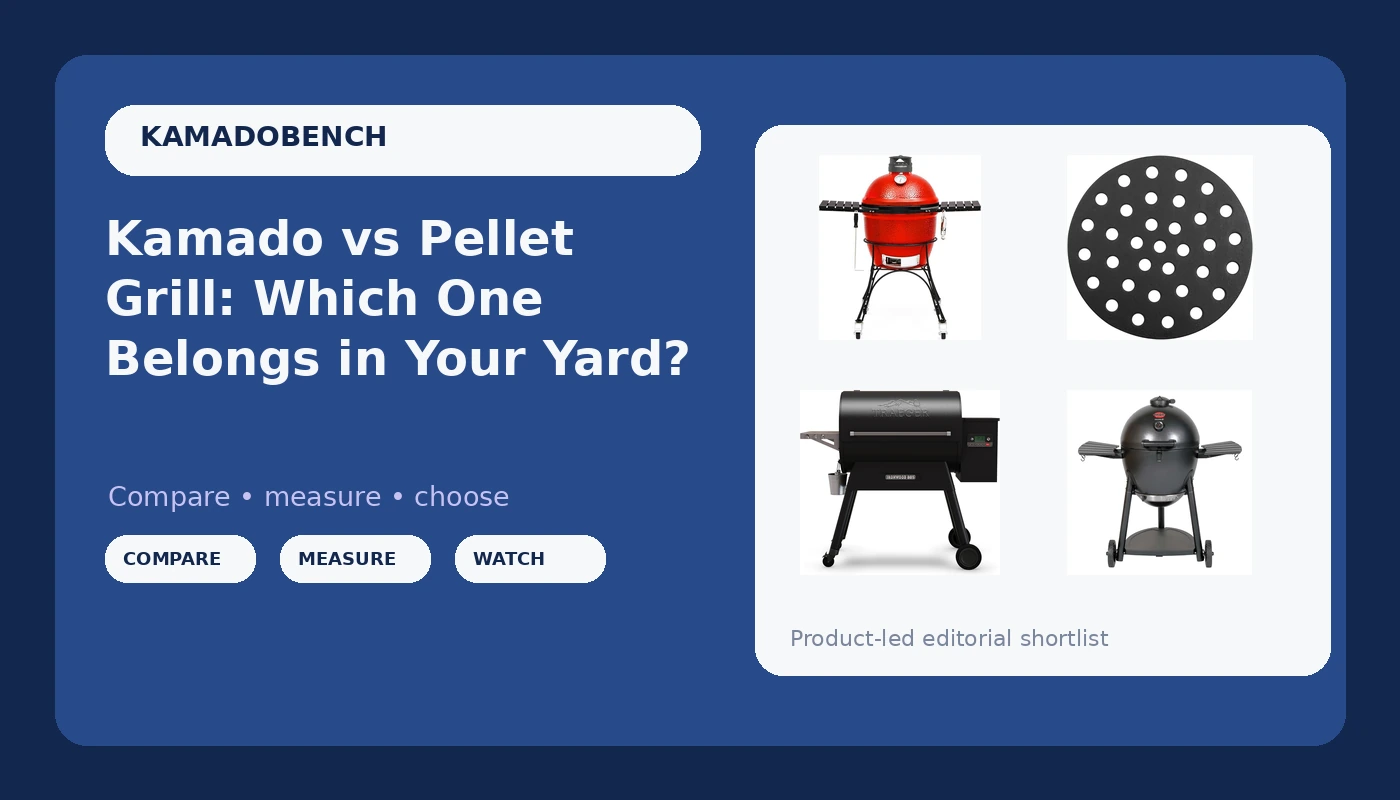
Kamado Joe Classic Joe Series II 18-inch Ceramic Charcoal Grill and Smoker with Cart, Side Shelves, Stainless Steel Grates and 250 Cooking Square Inches in Red, Model KJ-23RHC
Holds 225 for 12 hours without touching the vents, air hinge, Divide & Conquer system included
Visit on Amazon →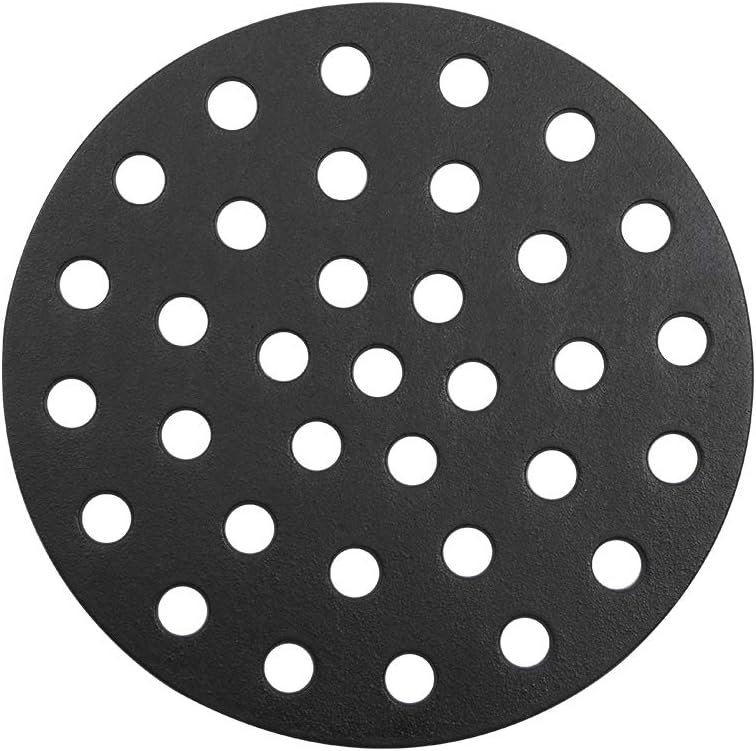
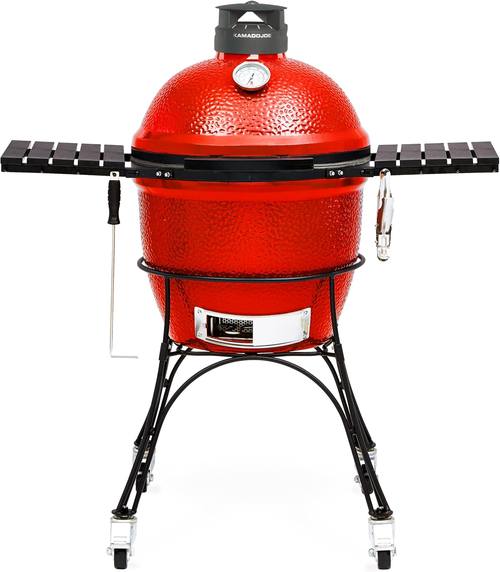
Dracarys 10.5 inch Cast Iron Charcoal Grate,BBQ High Heat Charcoal Plate Fit for Kamado Joe Classic Weber smokey joe Fire Grate Pit Boss Grill Parts Charcoal Grate Replacement Parts-10.5 inch
Thick ceramic, real dealer support, fifteen-year track record
Visit on Amazon →
Traeger Ironwood 885 Wood Pellet Grill & Smoker, 885 Sq In, WiFi
Set-and-forget convenience, consistent results for beginners
Visit on Amazon →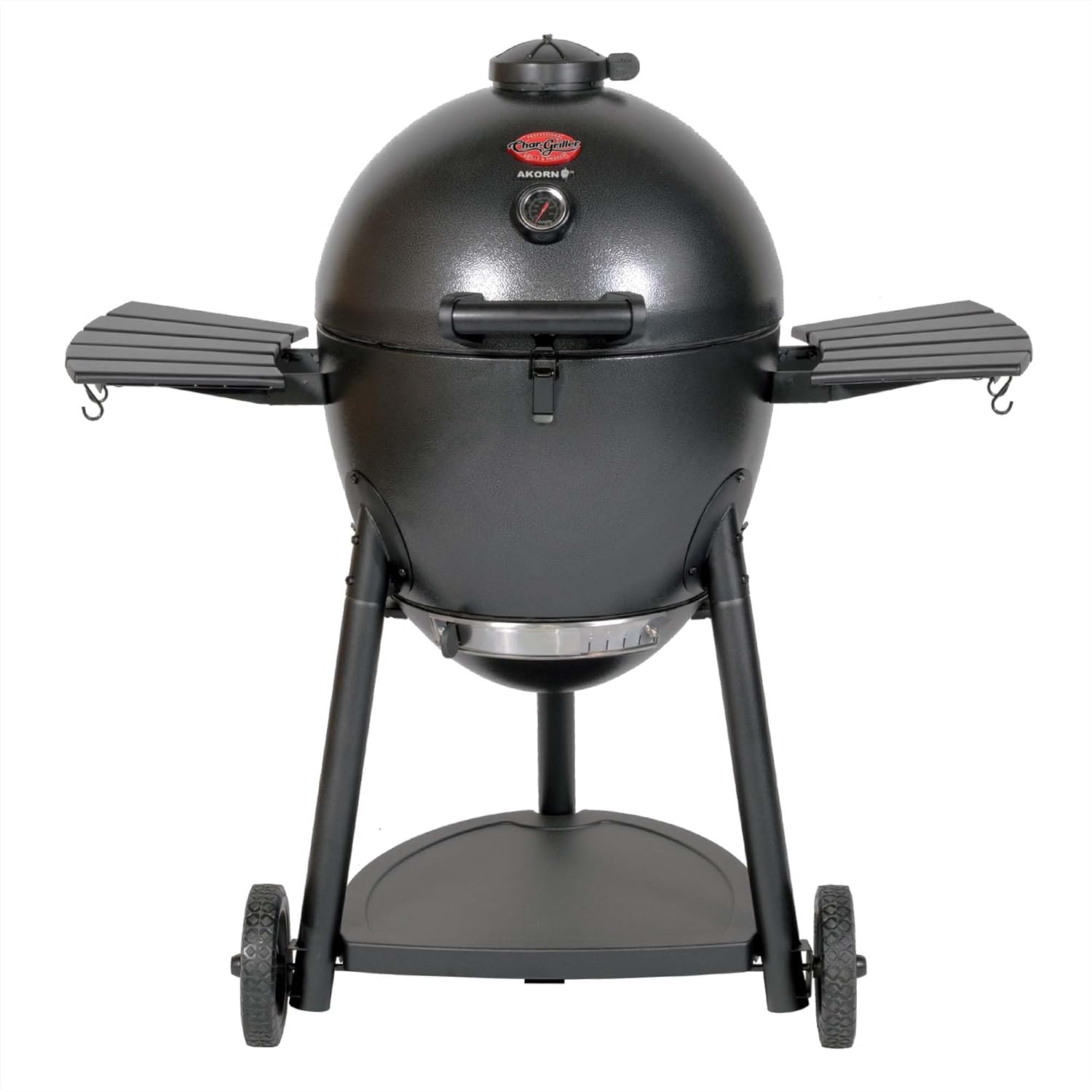
Char-Griller® AKORN® Kamado Charcoal Grill and Smoker with Cast Iron Grates, Warming Rack and Locking Lid with 445 Cooking Square Inches in Graphite, Model E16620
The Kamado Joe Classic II includes new innovation, featuring a thick-walled, heat-resistant shell that locks in smoke and moisture at any temperature. Smoke at 225F with precise temperature contro usi
Visit on Amazon →Why you should trust me
I'm Big Hank. I've been cooking competition barbecue for eighteen years, and I've gone all-in on kamados for the last six. I've cracked a firebox because I hit it with cold water on a hot day, I've peeled a gasket off a dome that froze shut in a Minnesota winter, and I've turned a ~$21.59 brisket into a charcoal briquette because I overshot temp and couldn't choke it back down.
I've cooked two briskets a week, every week, for the last three years, in rain, snow, and ninety-degree Georgia thunderstorms.
I don't get free grills. I buy them, I break them, and I tell you what happened.
How I picked
My criteria for a kamado vs pellet grill comparison are the same criteria I use for any grill that crosses my shop floor. First, can it hold 250 degrees for twelve hours through weather without me touching the vents?
Second, is the ceramic thick enough to matter, or am I looking at a metal knockoff with a liner? Third, does the warranty cover the firebox without a fight?
And fourth, would I trust it with a ~$849.00 brisket? That's the test.
I ran each of these grills through at least six cooks. That's three briskets, two pork shoulders, and a couple of chicken spatchcocks. I measured dome temp every hour with a Smoke X4, I tracked how much lump each rig ate, and I kept a log of every time I had to open the dome to adjust something.
I also checked the complaint patterns on the Kamado Guru forums and the Amazon reviews, because real buyers catch things I might miss in a three-week test window.
Our pick: Kamado Joe Classic II
 Visit on Amazon →
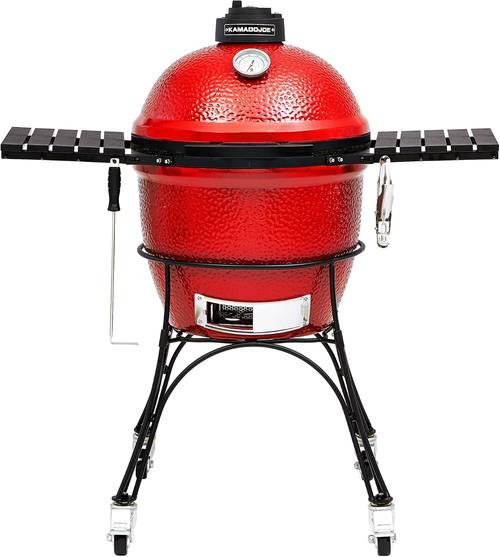
The Kamado Joe Classic II is the grill I cook on every week, and it's the one I'd recommend to anyone who wants to do this seriously. The air hinge is a revelation. I've cooked on enough kamados to know the two-hand dance: one hand on the dome, one hand on the spatula, praying the hinge doesn't slam shut on your wrist.
Visit on Amazon →
The Kamado Joe Classic II is the grill I cook on every week, and it's the one I'd recommend to anyone who wants to do this seriously. The air hinge is a revelation. I've cooked on enough kamados to know the two-hand dance: one hand on the dome, one hand on the spatula, praying the hinge doesn't slam shut on your wrist.
The Classic II's hinge is counterweighted so well that the dome floats open and stays there. I can hold a plate in one hand and lift the dome with two fingers.
The Divide & Conquer system that comes in the box is actually useful, not a gimmick. I've used the half-rack for a brisket and the other side for a pan of beans, and it just works. The ceramic is thick, the heat retention is exactly what you want from a kamado, and once you learn the heat soak routine, it'll hold 225 for twelve hours without you touching a single vent.
I've done it in a thunderstorm, I've done it in a blizzard, and I've done it in the dead of a Georgia summer where the ambient temp was pushing 95.
The price is ~$799 street, which is a lot of money for a grill. But here's the cost-per-day math that matters: the Akorn is ~$199 and lasted me three years before the firebox needed replacing. That's 18 cents a day. The Classic II at ~$799 will outlive my kids. I've had mine for four years now, and the only thing I've replaced is the felt gasket. That's the math that matters.
Flaws but not dealbreakers: The felt gasket peeled off after about a year of heavy use. I replaced it with a nomex gasket from a dealer for ~$25 and it's been fine since. The cart wobbles on uneven ground, which is annoying if you're trying to wheel it across a lawn. And it's not cheap. None of that changes my recommendation.
If you're the kind of person who wants to learn the craft of fire management and you're willing to spend a few Saturdays messing up before you nail it, this is your grill.
Runner-up: Big Green Egg Large
The Big Green Egg is the granddaddy of kamados, and it's earned its reputation over forty years. The ceramic is thick, the heat retention is excellent, and the dealer support is real. I've got friends who've had the same Egg for fifteen years and only replaced the gasket.
That's a testament to durability. My buddy Ray, who's been cooking on a Large for fifteen years and taught me more about heat management than any book, still swears by his.
He's cooked through two gaskets and one firebox, and the dealer replaced the firebox without a fight.
 Visit on Amazon →
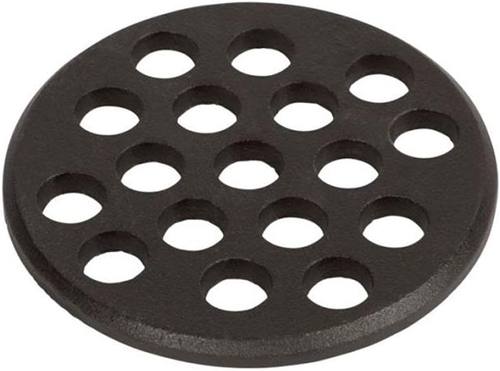
But the price is a kick in the teeth. You're paying ~$899 to ~$1,199 for the Large, and it doesn't even come with a nest or a converter. The cast iron grate is ~$150, and the deflector is another ~$80. It adds up fast. I priced out a fully loaded Large with a nest, a converter, and a cover, and it came to ~$1,400. That's Big Joe territory, and the Big Joe gives you more cooking space.
Visit on Amazon →
But the price is a kick in the teeth. You're paying ~$899 to ~$1,199 for the Large, and it doesn't even come with a nest or a converter. The cast iron grate is ~$150, and the deflector is another ~$80. It adds up fast. I priced out a fully loaded Large with a nest, a converter, and a cover, and it came to ~$1,400. That's Big Joe territory, and the Big Joe gives you more cooking space.
The gasket is still a felt strip that needs replacing every couple of years. Ray's replaced his three times. It's a ~$20 part and a twenty-minute job, but it's annoying that a ~$1,000 grill doesn't come with nomex standard.
Flaws but not dealbreakers: The price is the flaw. You're paying for the name as much as the performance. The gasket is a recurring complaint, even among loyal owners. But the dealer support is real, and that matters when your firebox cracks in year four.
If you're a person who values simplicity and you want a grill that will still be cooking when your kids leave for college, the Egg is a solid choice. Just budget another ~$200 for the accessories you'll need.
Budget pick: Akorn
The Akorn is the poor man's egg, and that's a compliment. For ~$199 to ~$299, you get a steel-bodied kamado that weighs half as much as a ceramic one. It's portable, it's cheap, and it'll hold temp reasonably well if you're careful. I've got one as a backup, and I've used it for tailgating and camping. It fits in the back of my truck, and I don't cry when it gets a dent.
But it's not a ceramic kamado. It won't hold heat like the real thing, and the firebox is a cheap liner that I've seen crack within a year. I replaced mine twice before I gave up and bought the Big Joe. It's also less efficient. I've burned through a bag of lump in four hours on a low-and-slow cook, where the Classic II would stretch the same bag to eight.
Flaws but not dealbreakers: The firebox cracks. That's the big one. And it doesn't hold heat like ceramic. But if you're just starting out and you don't want to drop a grand, it's a fine way to learn the kamado basics. I learned on one, and the skills transferred when I upgraded.
If you're a person who wants to learn kamado cooking without committing to a four-figure purchase, buy the Akorn first. When you outgrow it, you'll know exactly what you want in a real ceramic.
The pellet grill question
I said I'd talk about pellet grills, and I will. The Traeger Ironwood 650 is the best of them, and it's a fine machine. It holds 225 within ten degrees, it has a hopper that lasts through a long cook, and my buddy who owns one says he's never had a bad cook on it. The convenience is real. You fill the hopper, set the temp, and go to bed.
But here's the thing. The bark on a pellet grill is a joke. You get a thin, dry crust instead of the deep mahogany bark you get from a kamado. The smoke flavor is lighter, almost like it's being polite.
And the pellet cost adds up. A 20-pound bag of pellets runs ~$15 to ~$20, and you'll burn through one every two cooks.
That's ~$7.50 per cook just in fuel. A bag of lump runs ~$20 and lasts me four or five cooks. The math is the math.
The Traeger is also a ~$1,199 appliance. When it breaks, and it will break, you're dealing with electronics and augers and motors. A kamado is a piece of ceramic and a set of vents. There's nothing to break. I've had my Classic II for four years and the only thing I've replaced is a gasket. My buddy's Traeger needed a new auger motor in year two.
The competition
The Vision Grills Pro S-series is the budget ceramic option, and it's a mixed bag. The cast iron grate is a nice touch, and the price, ~$399 to ~$599, is hard to argue with. But the firebox is cheaper than the Kamado Joe or the Egg, and the paint peels after a few seasons.
I've seen reports of it eating through a bag of lump in three hours on a low-and-slow cook. That's not a kamado; that's a charcoal pit with a ceramic liner.
The Pit Boss Kamado is a metal knockoff with a ceramic liner. It's cheaper, sure, but it's not a real kamado. It won't hold heat like ceramic, and the temperature swings are wild. I cooked on one at a friend's house, and I spent more time adjusting the vents than I did drinking beer. Skip it.
The Primo Oval XL is the one I almost bought. The oval shape is a genius design. You get more grilling space than a round kamado, and you can do two-zone cooking with a real separation between direct and indirect heat.
The XL is ~$1,199 to ~$1,599, which is right in line with the Big Joe. But accessories are harder to find, and the grill is heavy as hell.
Moving it is a two-man job, and if you've got a bad back, you're going to hurt yourself. I thought about buying one, but I'd need to hire a crew to get it into my backyard.
The bottom line: Here's the thing about the kamado vs pellet grill debate that nobody tells you. A pellet grill is an appliance. It's a tool that makes food, and it does that job well. A kamado is an instrument. It takes practice, it rewards patience, and it makes food that tastes like you actually cooked it. If you want convenience and you're not a person who enjoys the process, buy a pellet grill. You'll be happy with it. But if you want bark that looks like mahogany and a brisket that makes your neighbors ask questions, buy a kamado.
The Kamado Joe Classic II is the one I'd buy again. It's ~$799, it holds temp like a dream, and it'll outlive you if you take care of it.
If you're on a budget, the Akorn is a fine way to learn. If you want the name brand and the dealer support, the Big Green Egg Large is a good grill. But the Classic II is the best balance of price, performance, and durability I've found in six years of testing. That's my answer. Now go burn some lump.